Presence Over Solutions: How Missouri's Jesuit Communities Are Rediscovering the Sacred Work of Simply Being With Others
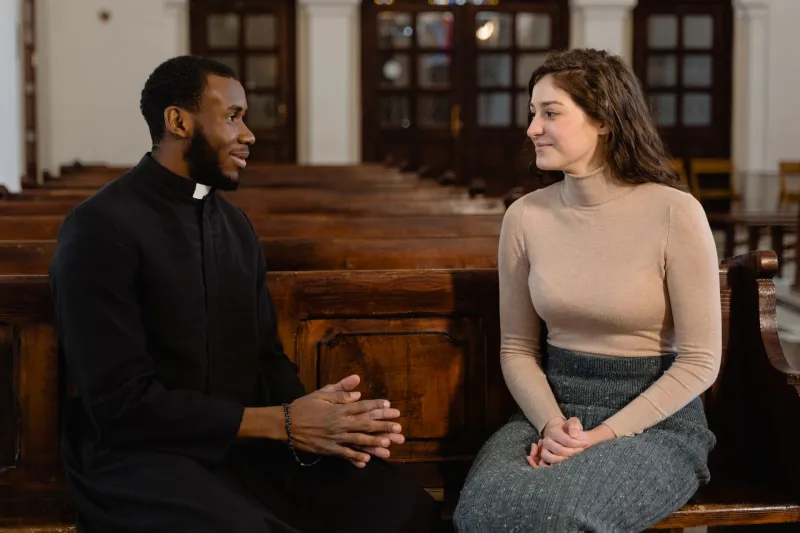
There is a particular kind of discomfort that arises when we encounter suffering we cannot remedy. A neighbor struggling with addiction. A family living without stable housing. A friend navigating a mental health crisis that no amount of well-meaning advice seems to reach. The instinct to intervene—to offer a program, a resource, a fix—is not wrong, exactly. But it is incomplete. And in many cases, it quietly communicates something the sufferer already fears: that their pain is a problem to be managed rather than a reality to be honored.
The Jesuit tradition has long held a different vision. Known as acompañamiento—accompaniment—it is a spiritual and pastoral discipline that asks something more demanding than charity: it asks for presence. Not the efficient, outcome-measured presence of a social services intake form, but the slow, attentive, often uncomfortable presence of one human being choosing to remain with another in their darkness, without the pressure to turn on the lights.
Across Missouri, Jesuit pastoral workers, educators, and community organizers are drawing on this tradition with renewed urgency—and finding that it is quietly reshaping how entire communities understand compassion.
What Accompaniment Actually Means
The concept is deceptively simple. To accompany someone is to walk beside them—not ahead, not behind, but alongside. In Jesuit pastoral theology, this posture draws directly from the Incarnation: the belief that God did not send instructions from a distance but entered into human suffering in the most intimate way possible. The pastoral implication is clear. Those who minister in the Ignatian tradition are not called to stand above suffering and diagnose it, but to descend into it with those who have no choice.
For many Missouri-based practitioners, this distinction between accompaniment and intervention is not merely semantic. It changes everything—the questions asked, the silences tolerated, the timelines accepted.
"There is a real temptation, especially among people of faith, to want to redeem suffering quickly," says one Jesuit pastoral associate working with unhoused populations in St. Louis. "We want there to be a lesson, a turning point, a moment of grace we can point to. But the people I walk with don't always get those moments on our schedule. Sometimes faithfulness just means showing up again on Tuesday."
The Culture of the Quick Fix
To understand why accompaniment is countercultural, one need only look at the broader landscape of American civic and charitable life. Fundraising campaigns promise to "end" poverty or "solve" homelessness. Volunteerism is often structured around discrete, bounded engagements—a Saturday morning at a food pantry, a holiday meal served and photographed. These contributions are not without value. But they can inadvertently reinforce a transactional model of compassion in which the giver's discomfort is relieved as much as the recipient's need.
Ignatian formation pushes back against this model not by dismissing structured service, but by insisting that it be grounded in something deeper: genuine relationship. The Spiritual Exercises of St. Ignatius of Loyola are, at their core, an invitation to encounter God in the particularity of human experience—one's own first, and then, by extension, the experience of others. A person formed in this tradition learns to resist the impulse to abstract suffering into categories and statistics. They are trained, instead, to see a face.
"Ignatian spirituality asks you to sit with what is actually in front of you," notes a social justice coordinator at a Jesuit-affiliated community center in Kansas City. "Not the idea of poverty, not the policy debate about poverty—the person who is poor and who is standing in front of you right now. That's a discipline. It doesn't come naturally in a society that rewards efficiency."
Accompaniment in Practice Across Missouri
In practical terms, Missouri's Jesuit communities are embedding the principles of accompaniment into a range of pastoral and advocacy contexts.
In St. Louis, street ministry teams affiliated with Jesuit institutions have shifted their model away from one-time outreach events toward sustained relational presence in neighborhoods experiencing concentrated poverty. Volunteers are trained not only in resource navigation but in the art of listening—specifically, in resisting the urge to redirect, correct, or problem-solve during conversations with individuals in crisis.
In Kansas City, a Jesuit parish has developed a mental health ministry that pairs trained parishioners with congregation members navigating depression, anxiety, and grief. The program explicitly discourages participants from offering advice or theological explanations for suffering. Its primary directive is simpler and harder: stay.
In rural Missouri communities, where the isolation of poverty is compounded by geographic distance from services, Jesuit-connected outreach workers describe accompaniment as a form of witness—a refusal to allow suffering to go unseen simply because it is inconvenient or geographically remote.
The Spiritual Cost—and Gift—of Remaining
Accompaniment is not without its toll. Those who practice it regularly speak of the weight of absorbing others' pain without the relief of resolution. Burnout is a genuine risk. Secondary trauma is real. The Ignatian tradition addresses this not by urging practitioners to feel less, but by insisting that they tend rigorously to their own interior lives.
This is where the Examen—the daily Ignatian prayer practice of reflective review—becomes indispensable. Practitioners are encouraged to bring the encounters of the day before God, not to process them efficiently, but to notice where consolation and desolation arose, where they felt most alive to another's humanity, and where they felt most tempted to withdraw. This interior attentiveness is not a luxury for those engaged in accompaniment work. It is a structural necessity.
"You cannot give what you do not have," one Jesuit formation director in Missouri observed. "The discipline of accompanying others in suffering has to be sustained by a deep interior life. Otherwise you are running on guilt, and guilt is not a renewable resource."
An Invitation to a Different Kind of Service
For those in Missouri's Jesuit communities who feel called to more meaningful engagement with suffering—but who have grown weary of activism that leaves them feeling hollow—accompaniment offers a reorientation rather than a new program.
It begins with a willingness to be present without an agenda. To visit the same person more than once, even when nothing appears to change. To ask questions and wait for answers. To resist the impulse to narrate someone else's suffering in terms that make the narrator feel better.
It is, in the end, a profoundly Ignatian act: to find God not in the resolution of suffering, but in the midst of it. To believe that one's presence—offered freely, consistently, and without condition—is itself a form of grace.
Missouri's Jesuit communities are not claiming to have perfected this practice. But they are insisting, with increasing clarity, that it is the practice worth pursuing. In a world full of people who will offer solutions, the rarest and most sacred thing may simply be someone who will stay.