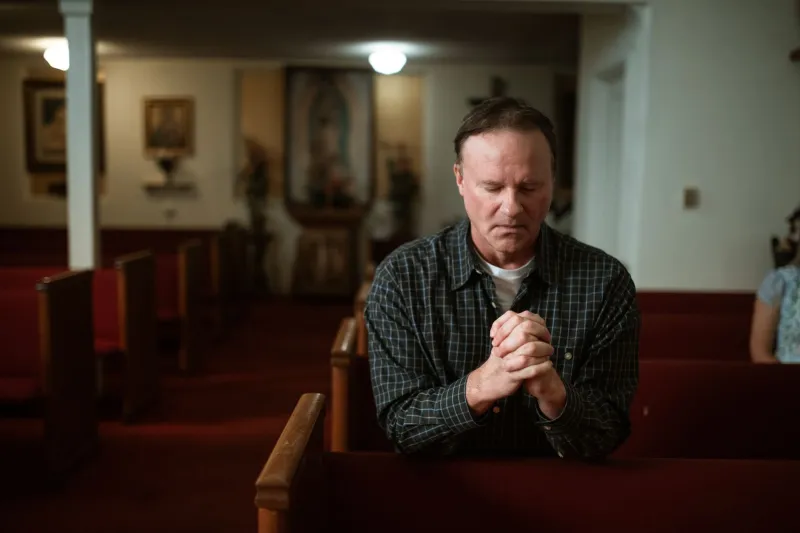
Silent Heaven, Faithful Feet: Missouri Jesuits on Prayer That Feels Like Nothing
Photo: Stiller Beobachter from Ansbach, Germany, CC BY 2.0, via Wikimedia Commons
The Question Nobody Asks Out Loud
You set the alarm ten minutes early. You open the Gospel. You sit in the same chair, in the same corner, with the same mug. And nothing happens. Not warmth, not insight, not even distraction — just a stretch of minutes that closes like a door and leaves you wondering whether you have been doing this wrong for years.
It is one of the most common things a person will ever confess to a spiritual director, and one of the least likely things anyone will mention to a friend at church. If this is where you are, the first thing worth saying is that you are not a failure, and you are not alone. The second is that the tradition you belong to has been thinking about this for a very long time.
What Ignatius Actually Taught
The Spiritual Exercises are not a manual for producing religious feeling. Ignatius of Loyola, writing from his own erratic and sometimes violently consoled experiences at Manresa in the 1520s, treated consolation and desolation as weather rather than proof of anything. Consolation is the climate in which love feels easy. Desolation — his word is desolación — is the opposite: dryness, restlessness, low-grade sadness, a mind that cannot settle, a pull toward giving up on something you had begun to care about.
In his rules for discernment, Ignatius warns plainly that desolation is not the time to make a change. If you promised to pray daily, you keep the promise. If you decided in a clearer season to stay in a marriage, a parish, a vocation, a program of study, you do not revise that decision in the dark. This is not advice about emotions. It is advice about timing, and it has rescued an untold number of people from decisions they would have regretted by spring.
The Rule Nobody Quotes
And then there is a stranger, gentler line in the same list of rules. Ignatius compares desolation to a spoiled child — or, in another image, to a woman unfairly treated by her husband, who will not be placated by grand gestures but will calm down if you quietly stay present and simply endure. The instruction is almost scandalous in its modesty: do not try to fight your way out with willpower and scenery changes. Get through it patiently. Let it settle.
One Jesuit director who has worked with retreatants in Missouri for more than thirty years puts it this way in practice: “People come in convinced they need a breakthrough. Most of the time what they need is a Tuesday.”
Show Up Anyway — and Be Practical About It
Unsentimental wisdom from the retreat houses and parish ministry of this state tends to sound less like mysticism and more like good sense.
Keep the appointment, but feel free to shrink it. Twenty faithful minutes beat an hour you dread and cancel. The habit is the container; God is not measuring proficiency.
Change the posture before you change the commitment. Walk the neighborhood Rosary you usually say sitting. Pray the psalms in a car. Kneel in an empty church that is open on a weekday. The Missouri landscape itself helps; several directors send retreatants outdoors when the sitting has gone stale.
Ask the body a question before you ask the soul one. Chronic dryness in prayer often travels with disrupted sleep, untreated grief, a thyroid problem, a job in crisis, or depression. There is no virtue in praying through a medical condition that deserves a physician. Spiritual directors in the Ignatian tradition are trained to say so plainly, and good ones know when to send you to a doctor.
Tell one person. Desolation thrives in the dark and deflates when spoken aloud to a confessor, a director, or a trusted friend who will not offer solutions.
Use the Examen when you cannot manage anything else. Two minutes at night: Where did today feel alive? Where did it feel dead? What do I want to ask for tomorrow? It is the lightest prayer the tradition has, and it works in almost any condition.
The Long Middle
There is a difference, which the tradition names carefully, between the ordinary dryness of a faithful person and the deep interior darkness described by John of the Cross — the long night in which God seems to have withdrawn even the memory of consolation. Saint Teresa of Calcutta's letters describe that night lasting decades. She kept a date with the Blessed Sacrament anyway. So do the ordinary people who show up at St. Louis–area daily Masses in the winter dark, and whose fidelity no one applauds.
This is where Jesuit spirituality is most clear-eyed. Consolation is a gift, not a wage. If you are only praying because it pays, desolation will eventually feel like a paycheck that bounced. If you are praying because you have decided to be a person who prays, the dry seasons become something else entirely: not evidence of absence, but the shape of a fidelity that no longer depends on reward.
For the Person Who Feels Like a Fraud
You will not be scolded at the door of a Missouri Jesuit parish or retreat house for saying that prayer has been flat since Easter. Say it once, out loud, to someone who is trained to listen. The counsel you receive will likely be less dramatic than you expect: keep your ten minutes, check your sleep, receive the sacraments even when you feel nothing, and watch for the small return of desire.
And if none of that is enough on a given night, remember that Gethsemane contains a prayer offered in agony, by someone who described it as a cup he did not want, and that it was heard.