Bread Broken Together: Transforming the Family Table Into a Place of Ignatian Prayer and Presence
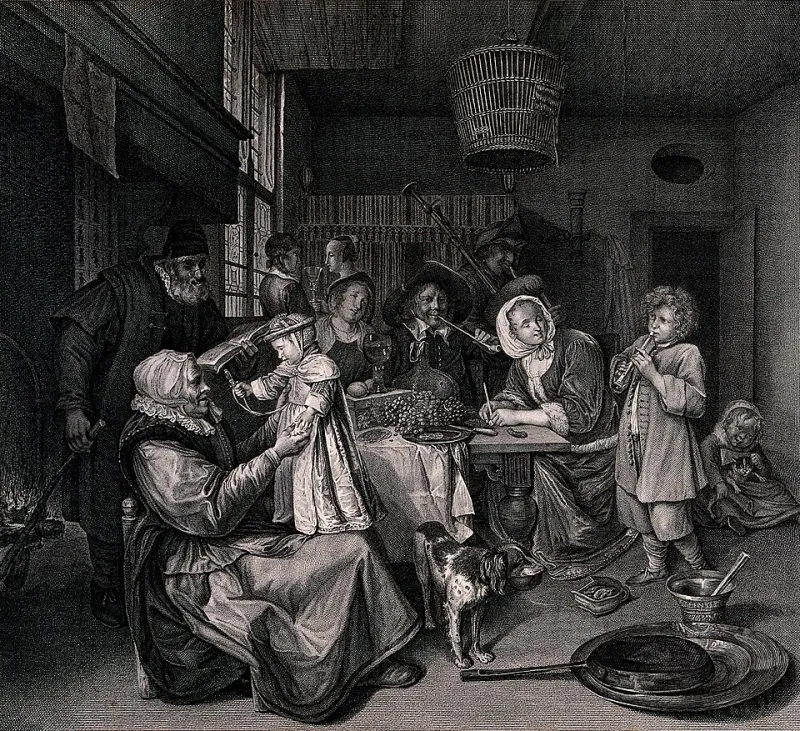
Photo: After Jan Steen, CC BY 4.0, via Wikimedia Commons
There is something quietly radical about sitting down together for a meal. In a culture that prizes speed, efficiency, and individual schedules, the deliberate act of gathering around a shared table carries a countercultural weight that St. Ignatius of Loyola would have recognized immediately. For the Jesuit tradition, the ordinary is never merely ordinary. Every moment — including the passing of a bread basket or the pouring of a glass of water — holds the potential to become a doorway into the sacred.
For Missouri families navigating the noise of contemporary life, the dinner table may be one of the most underutilized sites of spiritual formation available. What follows is not a program to be implemented with rigid precision, but an invitation to approach mealtime with greater intentionality, drawing on Ignatian principles that have shaped the interior lives of countless men and women across five centuries.
Finding God in the Familiar
At the heart of Ignatian spirituality lies a conviction that God is present and active in all things — not merely in churches, retreats, or formal moments of prayer, but in the textures of everyday experience. St. Ignatius called this disposition finding God in all things, and it stands as one of the most accessible and transformative ideas his tradition has bequeathed to the wider Church.
Applied to the dinner table, this principle asks a deceptively simple question: What if we treated this meal as a moment worth noticing? Not in a performative sense, but with the genuine attentiveness that comes from believing that God is already present before the first fork is lifted.
Families might begin by establishing a brief moment of stillness before grace — not simply a rote recitation, but a genuine pause. Even ten seconds of shared silence can shift the atmosphere of a meal, signaling to children and adults alike that this time is set apart. Over weeks and months, that small ritual accumulates into something significant: a family culture of attentiveness.
The Examen at the Table
One of St. Ignatius's most enduring contributions to Christian prayer is the Examen, a structured reflection practiced twice daily that invites the practitioner to review their experiences in search of consolation and desolation — moments of closeness to God and moments of distance from God's grace.
Adapted for the family table, the Examen need not be lengthy or formally structured. It might take the shape of a simple question posed after the meal has been served: What was the best part of your day, and what was the hardest? This is not merely a conversation starter. In Ignatian terms, it is an invitation to notice where God was present and where God may have seemed absent — and to name those experiences aloud within a community of trust.
For younger children, the language can be simplified further. Questions such as When did you feel happy today? and When did you feel sad or frustrated? accomplish the same spiritual work without requiring theological vocabulary. Over time, children raised in this practice develop a natural habit of interior reflection that serves them well far beyond the dinner table.
Families in Missouri who have incorporated a version of the Examen into their evening meals consistently report that the practice deepens conversation in ways that surprise them. Teenagers who might otherwise offer monosyllabic answers find themselves drawn into genuine sharing when the question is framed with care and received without judgment.
Gratitude as a Spiritual Discipline
Ignatian prayer is saturated with gratitude. The Spiritual Exercises of St. Ignatius return again and again to the theme of receiving — recognizing that every good gift, every capacity, every relationship is received rather than self-generated. This posture of receptivity stands in sharp contrast to the self-sufficiency that contemporary American culture so often prizes.
At the dinner table, gratitude can be practiced in forms both simple and substantial. Families might establish a tradition of naming one specific gift from the day before eating — not a generic acknowledgment, but a particular, concrete expression of thanks. I am grateful that my colleague helped me when I was overwhelmed this afternoon. I am grateful for the smell of rain on the way home from school. The specificity matters. Vague gratitude remains abstract; named gratitude becomes prayer.
Parents who model this practice with genuine vulnerability — who are willing to share their own struggles and their own moments of grace — give their children something invaluable: the witness of an adult who takes the interior life seriously.
Discernment as a Family Practice
The Jesuit tradition places enormous emphasis on discernment — the careful, prayerful process of weighing choices and seeking God's will in the midst of competing options. While formal discernment is typically associated with major life decisions, its underlying dispositions can be cultivated at the dinner table in age-appropriate ways.
Families might occasionally use mealtime to discuss a shared decision: how to allocate discretionary funds, how to respond to a neighbor in need, how to navigate a conflict within the extended family. The point is not to reach a quick resolution, but to practice the habits of listening, weighing, and attending to the movements of the heart that Ignatian discernment requires.
For older adolescents, these conversations can become genuinely formative. A teenager who has practiced articulating their interior experience at the dinner table for years is far better equipped to navigate the complex moral and vocational questions that await them in adulthood.
Setting the Table With Intention
None of this requires perfection. Ignatian spirituality has never been the province of the spiritually elite; it was designed, from its origins, for men and women living in the world, navigating ordinary responsibilities and ordinary failures. Some evenings the Examen will be skipped. Some meals will dissolve into distraction or conflict. The tradition asks not for flawless execution, but for a sustained intention to return.
For Missouri families seeking to deepen their faith at home, the dinner table is already there. It requires no special equipment, no additional time, and no prior theological training. It requires only the willingness to treat what is already ordinary as potentially sacred — which is, in the end, the most Ignatian thing one can do.
Begin small. Begin tonight. Set the table with a little more intention than yesterday, and trust that God, who is present in all things, is already waiting there.