2 A.M. in the Residence Hall: How Jesuit Campus Ministers in Missouri Meet Students in the Darkest Hours

Photo: Harrison Keely, CC BY 4.0, via Wikimedia Commons
The Hour When Ministry Happens
The phone in a residence hall on a Jesuit campus does not ring with theological questions at midnight. It rings because a student has not left their room in four days, or because a roommate is crying and cannot say why, or because a first-year who was fine at Homecoming has stopped eating. Campus ministers across Missouri have learned to expect it, and to answer.
The settings differ — a university in the city, a college up the hill in Kansas City — but the pattern is consistent. Students arrive as people of high achievement and thin margins. Many come with an anxiety diagnosis already in place, some with a history of self-harm, almost all with a phone that delivers comparison at all hours. Campus ministry is one of the few offices on campus that is open at the times when something breaks.
Where Accompaniment Ends and Care Begins
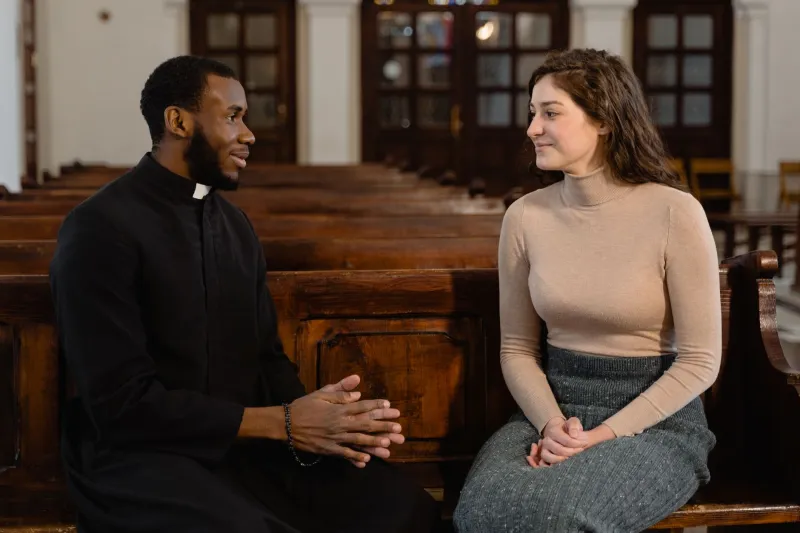
That reality has forced an honest conversation about boundaries, and the Jesuit ministers who spoke about this work are deliberate about stating them. A campus minister may sit with a student, listen, pray, ask about the immediate safety of the student, and walk with them across campus to the counseling center in the morning. A campus minister may not diagnose, may not run a treatment plan, and may not carry the load alone.
“The hardest mistake to unlearn is the belief that being a good companion means being sufficient,” one director of campus ministry in the St. Louis area said. “I am not sufficient. I am a bridge, and bridges are supposed to lead somewhere.”
That bridge language matters. Ministers describe keeping current referral numbers, knowing which counselor is on call, understanding what Title IX obligations and emergency protocols require, and knowing the difference between confidentiality in a spiritual conversation and a duty to report imminent risk. Prayer with a student in crisis is appropriate. Withholding a referral in order to remain the trusted figure is not, and every ministry contacted for this story insisted on that point.
Training the Front Line
The most significant shift on Missouri Jesuit campuses is the training of non-clinical staff. Resident assistants, coaches, and ministry interns are being taught the basics of suicide-risk gatekeeping: ask directly, do not promise secrecy you cannot keep, do not leave a person at risk alone, and connect them the same day. Lay ministers too are being formed in what used to be an unwritten part of the job.
The logic is simple arithmetic. A counseling center may see a student for fifty minutes every two weeks. A student may live in a hall with a peer who sees them every day. The gap between those two figures is where lives are usually saved, and the institutions are investing there.
What the Counseling Center Needs From Ministry
Partnership runs in both directions. Counselors at Jesuit colleges increasingly rely on campus ministry for what clinical settings struggle to supply: a sense that a student's suffering is not meaningless, a community that will keep showing up after the discharge paperwork is signed, an ordinary rhythm of meals, Mass, retreats, and conversation that gives a fragile young adult somewhere to land.
“Clinical care handles function,” one staff psychologist said. “Meaning is not our discipline. We need people next door who can hold it.”
Ministers describe serving as the connective tissue between offices that do not naturally talk: residence life, the counseling center, mission and identity, athletics, the dean of students. Cura personalis — care for the whole person — is often cited in Jesuit marketing, but practicing it in a mental-health crisis means admitting that the whole person is handled by at least six different departments who must be on speaking terms.
What Parishes Can Borrow
Three lessons from this work transfer directly to parish life in Missouri, where loneliness among older adults is at least as severe as anxiety among undergraduates and much less discussed.
Name the boundary and keep the warmth. Lay ministers can be honest about what they are not trained to do and still be the most reliable presence in a suffering person's week.
Train the people who are already nearby. Ushers, bereavement volunteers, small-group leaders, and sacristans see the same faces every week. A half-day of gatekeeper training for them does more good than a new program.
Build the bridge before it is needed. The parish that knows its nearest crisis services and its parishioner counselors in advance does not have to make phone calls from scratch at the moment someone is in danger.
A Word to Anyone Who Needs It Tonight
If you or someone you know is in crisis, call or text 988 to reach the Suicide & Crisis Lifeline, or go to the nearest emergency department. Jesuit ministry is glad to sit with you, and it will not substitute for that call.
The Church has never claimed that prayer replaces medication, or that accompaniment makes clinicians unnecessary. What it claims is smaller and steadier: that no one should spend the worst night of their life alone in a room, and that showing up is not a solution but it is not nothing. It is, in fact, the oldest Jesuit method there is.