Before the Arch: How Jesuit Missionaries Traced the Spiritual Geography of Missouri
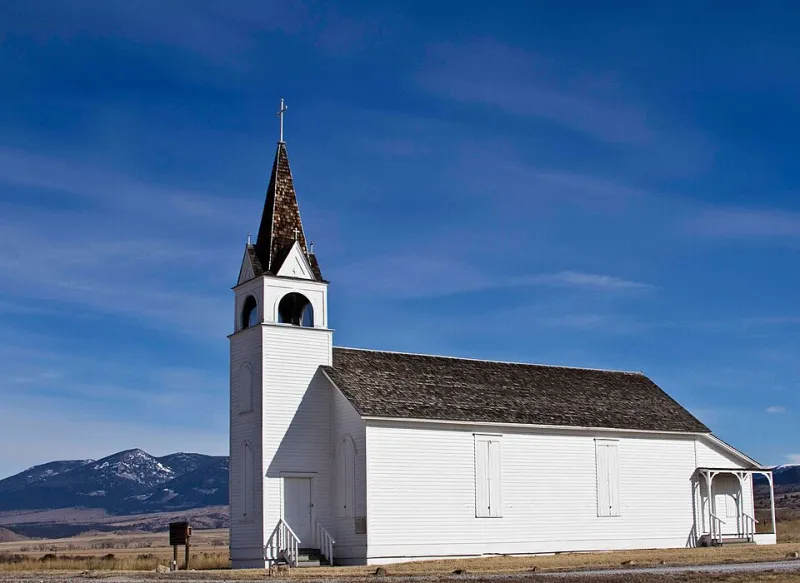
Photo: Mtmonte, CC BY-SA 4.0, via Wikimedia Commons
A River That Carried Prayers
In the summer of 1673, a small party of French travelers paddled south past the mouth of a great tributary and felt its current shove against the canoe. Jacques Marquette, a Jesuit, wrote down the name he had learned for the river — Pekitanoui — and noted the muddy water that discolored the Mississippi for miles. He was searching for a passage to the sea, not founding a diocese. Yet that brief entry in a travel journal is among the earliest written traces of a Jesuit imagination reaching into the land that would become Missouri.
Three and a half centuries later the traces are everywhere and mostly unnoticed: a university on Grand Boulevard, a retreat house folded into the hills west of St. Louis, parish halls in working-class neighborhoods, a high school that has handed diplomas to generations of Kansas City families. The spiritual map of this state was drawn slowly, by men on horseback and riverboats, and not always cleanly. Understanding how it was drawn is part of understanding what Catholic life in Missouri is in 2026.
The French Chapter Across the Water
For most of the eighteenth century, the Jesuit presence in the middle Mississippi valley was anchored on the Illinois side. Priests based near Kaskaskia and Cahokia served French settlers, fur traders, and Native communities whose villages and trade routes crisscrossed the river long before any European arrived. Missouri, from that vantage, was the far bank — a place of passage, hunting grounds, and mission journeys rather than a settled base.
The written record from those decades is thin, and what survives was kept by men who were more interested in baptisms and conversions than in the societies they were describing. Historians have learned to read those sacramental registers carefully, because they record as much about what the missionaries failed to understand as about what they accomplished.
When the Map Went Dark
In 1773, Pope Clement XIV suppressed the Society of Jesus under pressure from European courts. The effect reached the Mississippi valley with a delay measured in months but felt in decades. Jesuits in the region were cut loose from the order that had formed them; some continued as secular priests, others returned to France, and the mission work limped forward on the energy of individuals rather than institutions. For roughly four decades, the Jesuit thread in this part of the world was nearly invisible.
It was not severed. Pope Pius VII restored the Society in 1814, and a generation of young men who had read about the old missions began asking to reopen them.
1823: Florissant and a Complicated Commission
The restoration arrived in Missouri through Bishop Louis William DuBourg, who invited Jesuits to the Diocese of Louisiana and the Floridas with a specific hope: that they would evangelize Native peoples while training priests for a frontier Church that had almost none. In 1823, the first group settled at Florissant, just northwest of St. Louis, and established what became St. Stanislaus Seminary. It would form Jesuit priests for nearly a century and a half.
The missionary record that followed is a genuine mixed inheritance, and it should be described as one. Missouri Jesuits did travel into Osage country and later supplied priests to Potawatomi communities removed west of the state line in the 1830s. They learned languages, endured hardship, and buried friends. They also worked inside a national policy that treated Native nations as obstacles to be removed, and their letters and reports sometimes reduce living communities to categories of success and failure. Catholic religious orders, including the Society of Jesus, have in recent years opened archives and commissioned research into that history and into religious-run boarding schools. That work is unfinished, and it belongs on the same map as the parishes.
Bricks, Books, and Retreats
If the first chapter was rivers, the second was buildings. The Jesuits took charge of St. Louis College in 1829, and the institution that became Saint Louis University grew from there — the oldest university west of the Mississippi. The Missouri Province was formally established in 1861, giving Jesuits here their own governance and a sense of permanence. Rockhurst opened in Kansas City in 1910, answering a demand for Catholic higher education that the state's western side had felt for decades. The White House Retreat in south St. Louis County began welcoming guests in 1922 and has been a place of silence, confession, and decision ever since.
Parish work followed the city outward: German, Irish, Italian, and later Vietnamese and Latino neighborhoods each received a Church that spoke their language and buried their dead. Jesuit-run parishes and schools did not sit apart from the city's politics; they were part of its fabric.
What the Map Asks in 2026
In this decade the shape of Jesuit ministry in Missouri has changed. A 2014 regrouping of provinces across the South and Southwest placed the Missouri works within a wider administrative body, and community life has adapted accordingly: fewer men, more collaboration, and heavier reliance on lay colleagues who carry much of the teaching, spiritual direction, and social ministry.
The works themselves remain recognizable. Campus ministry at Saint Louis University and Rockhurst, retreats and spiritual direction, prison and immigrant accompaniment, parish sacramental ministry, and a persistent commitment to education in the Catholic intellectual tradition. But the question the archives keep asking is a forward-looking one: what does it mean to have inherited a map that includes both faithful service and real harm?
The honest answer is that both are true, and that a Church confident enough to claim its history should be confident enough to examine it. The muddy river Marquette paddled past still runs past this city. So does the call that brought him, and the call that brought the Jesuits back in 1823 — to go where the people are, to learn what they actually need, and to leave behind something more durable than a journal entry.